About
This website aims to provide an overview of the current state of scientific knowledge on the sustainability of space activities and to offer analysis on this topic in relation to societal issues and current events. It also serves as a platform for centralizing the author's work and contributions on the subject.
The author
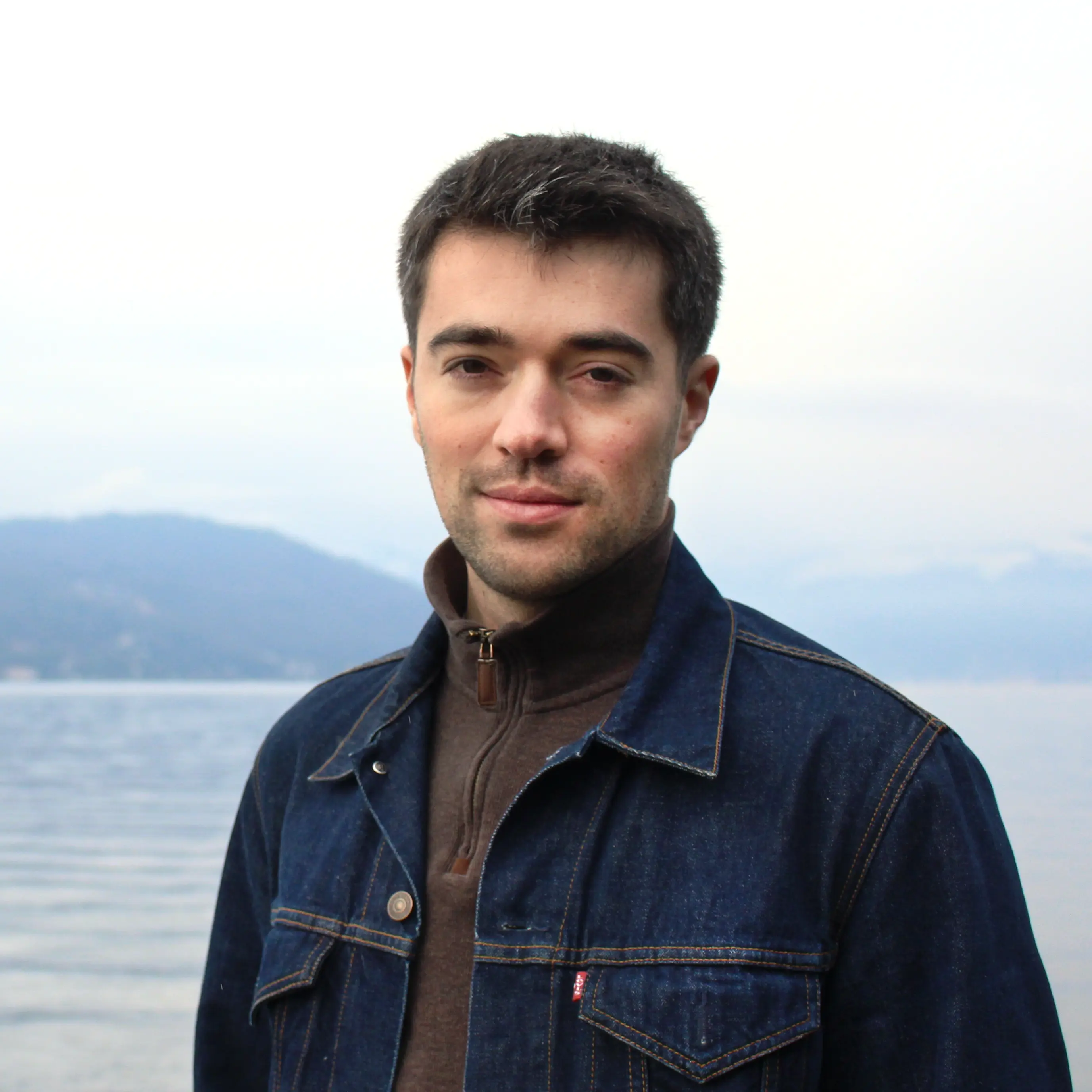
My name is Loïs Miraux and I am an engineer and researcher. I have a background in space engineering and environmental sciences (Centrale Nantes / Politecnico di Milano / Mines Paris).
From late 2020 until recently, I conducted research on the environmental sustainability of space activities, combining impact quantification with a systemic approach. I also advanced these issues as an environmental engineer at CNES and MaiaSpace, an independent consultant, a technical expert for Aéro Décarbo and The Shift Project, and through my work as a speaker and lecturer, notably at CentraleSupélec.
I am now working more broadly on energy and resource issues related to the transition, currently as an analyst at T&E after having been a researcher at the CEA's Institute of Energy Economics (I-Tésé).
In my analyses, I draw on this dual culture, which feeds into a transdisciplinary vision of the tensions between space expansion and planetary boundaries.
Vision
Fueled by a “single-use elixir” – fossil fuels – humanity has recently experienced a dramatic surge, reaching the space age. But this trajectory has come at the cost of overshooting nearly all planetary boundaries, that is, the progressive destruction of our own life-support systems. The scientific consensus is clear: the survival of modern societies depends on a rapid and massive reduction of our ecological footprint.
In this context, it is necessary to question the environmental costs of all human activities in relation to their benefits, including space activities. These activities offer a wide variety of services, some of which are valuable to the environmental cause, but at what price? Beyond the well-known issue of space debris, the negative externalities of space activities are numerous and still largely unknown: impacts on the life cycle on the ground, effects on the climate and the ozone layer from emissions from launches and atmospheric re-entries, and, of course, disruption of astronomical observations.
Despite these uncertainties and concerns, the space sector is currently experiencing unprecedented growth driven by the deployment of megaconstellations, while other speculative projects fuel grand promises: from solar power plants and data centers in orbit that are supposed to contribute to net-zero targets, to scenarios of space expansion and colonization presented as a way to escape planetary boundaries.
This raises some fundamental questions: how do space missions impact the environment and human activities, on Earth and in space? Which ones should be prioritized to minimize impacts? For what purposes, for whose benefit, and with what renunciations? Do we have credible mitigation solutions? More broadly, what kind of space activities do we want for tomorrow?